Featured in Livingetc: Clever light wells for brighter bathrooms
We’re pleased to share that Zane Carter Architects has been featured in Livingetc in an article exploring how artificial light wells can help bathrooms feel brighter, calmer and more connected to natural light.
Bathrooms are often among the most enclosed spaces in a home, particularly in compact urban layouts where windows, views and direct daylight may be limited. A considered lighting strategy can make a significant difference, not only to visibility, but to the overall feeling of the space.
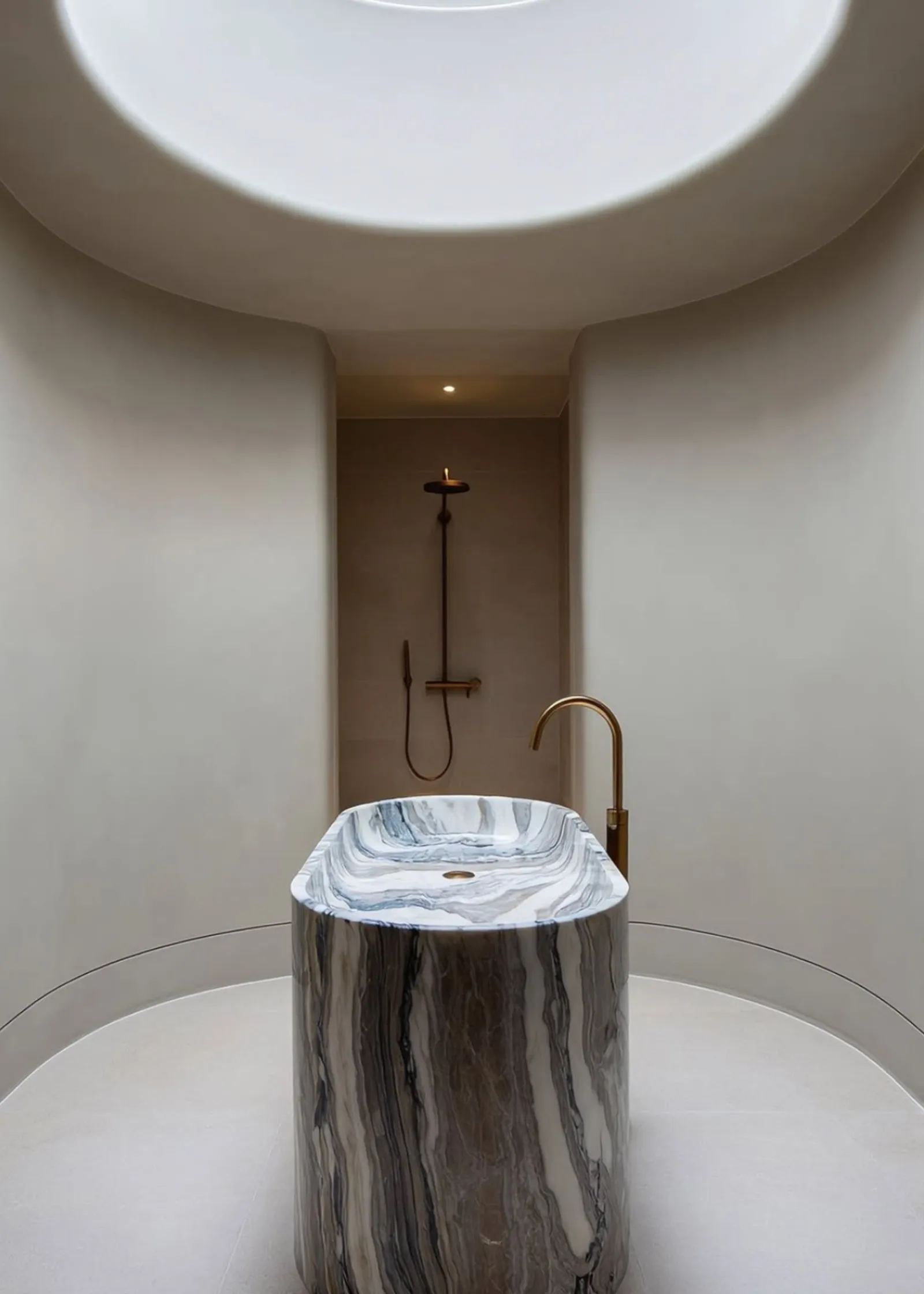
In the featured project, lead architect Sam Alawie explains how natural and artificial light work together to create a layered bathroom environment. A skylight brings daylight into the room, while integrated LEDs provide warmth and consistency when natural light changes throughout the day.
What is an artificial light well?
An artificial light well is a lighting detail designed to create the impression of daylight entering from above or behind a surface. It may be integrated into a ceiling, wall, recess or architectural void, using concealed LED lighting to create a soft, diffused glow.
Rather than relying only on downlights, this approach gives the bathroom a more atmospheric quality. The result can feel closer to natural daylight, helping the space appear larger, softer and more open.
Why light matters in bathroom design
Good bathroom lighting needs to do more than illuminate a mirror. It should support the rituals of the room, from morning routines to quiet evening moments.
Layered lighting can help achieve this. Natural light, concealed LEDs, wall lighting and task lighting each serve a different purpose. When they are considered together, the bathroom can feel more balanced and less clinical.
For compact bathrooms, this is especially important. A well-placed light source can draw the eye upward, soften shadows and create the sense of a more generous volume.
Designing with natural and artificial light
In our work, lighting is considered as part of the architecture rather than an afterthought. The most successful outcomes often come from combining natural daylight with discreet artificial lighting that supports the space at different times of day.
In the Livingetc feature, Sam notes that the bathroom is lit through both a skylight and integrated LEDs. The skylight brings in natural daylight, while the LEDs take over as the light drops, creating a consistent and layered atmosphere.
This balance allows the bathroom to feel bright and open during the day, then warmer and more intimate in the evening.
A small detail with a large effect
Light wells are a useful reminder that small architectural gestures can have a significant impact on how a room feels. In a bathroom, the right lighting detail can create depth, calm and a stronger connection to the rest of the home.
For us, the value of this approach is not only visual. It is about designing spaces that feel better to use every day, even when the site, layout or room size presents constraints.
You can read the full Livingetc article here: These Clever ‘Light Wells’ Are the Trick to Make Your Bathroom Feel Bright and Filled With Natural Light.
You can explore more of our interior design work or view our broader residential architecture portfolio.